
Sources for Alhambra Previous Residents
A house history needs an era map before it needs a name search. The current Assessor parcel provides the land key. Deeds supply recorded ownership. Directories and newspapers supply household or public-life clues. Census schedules add relationships and tenure for released years. Each source has a different access channel and a different meaning.
| Source | Years it covers | Where held | What it shows |
|---|---|---|---|
| Recorder deeds | 1850/1851-present | Norwalk RR/CC | Ownership chain and legal description |
| Assessor parcel | Current public data | Online portal | AIN, situs, map, assessment association |
| Homesteads | 1850-1921; index 1878-1920 | FamilySearch catalog | Early land claimant and record-book trail |
| Mortgages | 1850-1901; indexes to 1910 | FamilySearch catalog | Borrower and property financing clue |
| City directories | 1883-1964, nonconsecutive | Library and Society | Published occupant and address |
| Telephone directories | 1882-2011 | Historical Society | Listed address and subscriber bridge |
| Census | 1900-1950 public | NARA and partner sites | Household members and relationship |
| Permits | Current portal; historic cutoff unknown | Alhambra Community Development | Dated work and applicant evidence |
The Los Angeles County Assessor explains the public parcel and ownership context used before the backward search.
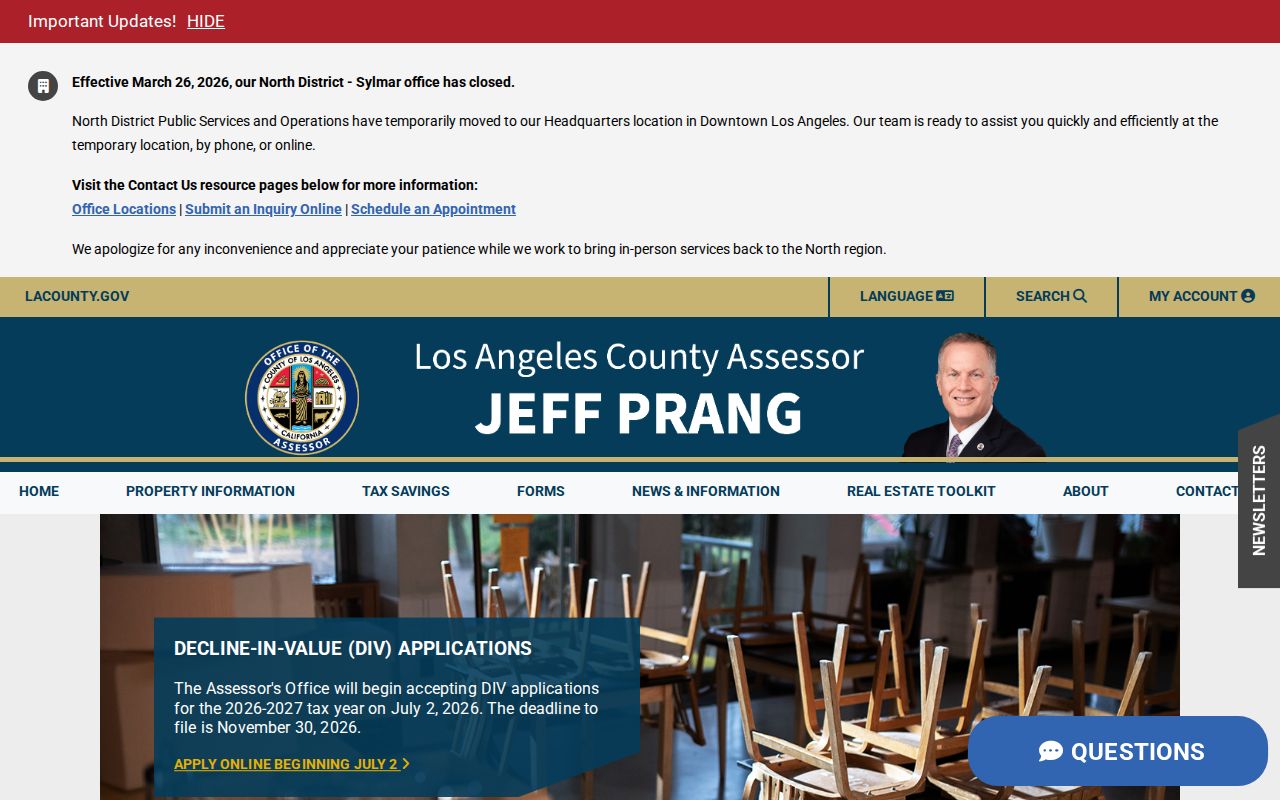
The current parcel is the fixed point. Older names still need their own date and source check.
Alhambra Deed Index Floors in Norwalk
Los Angeles County's recorder collection begins in 1850-1851 and is not searchable online by street address, APN, or telephone. The index uses grantor, grantee, and recording year. Records from 1851-1957 are reviewed in the Norwalk headquarters lower level; records from 1958-present are on the second floor. That floor split is a practical part of previous-resident research.
Known-document orders use a separate paid fulfillment route. RR/CC also provides mail and counter channels, including a certified-copy counter and a Norwalk mailing address. A copy order cannot replace the name-and-year index when the document number is unknown. Begin with the Assessor's current owner evidence and approximate acquisition year.
The county's recorder FAQ confirms how the grantor and grantee search works.
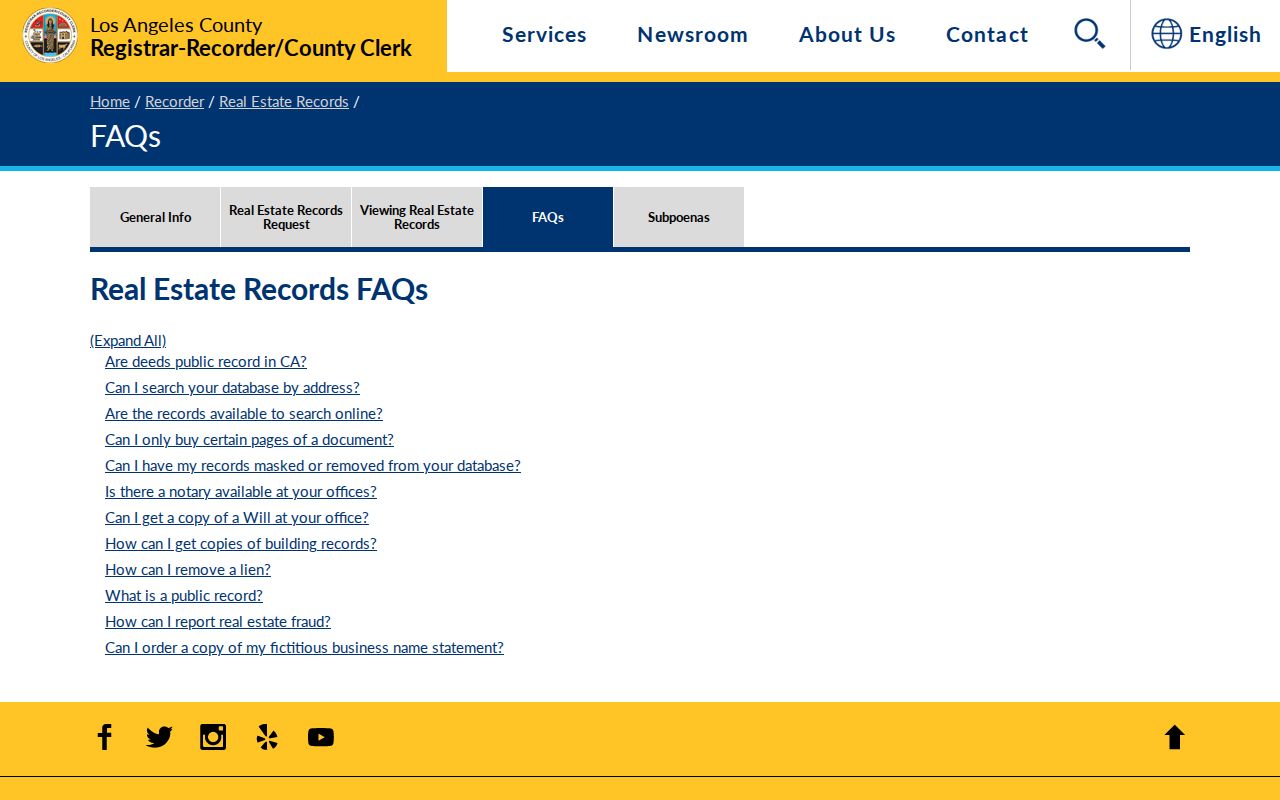
The FAQ is the warning against an address-only deed search. Use the land key to obtain a name, then use the county index.
- Grantor
- The person or entity transferring an interest in a recorded instrument.
- Grantee
- The person or entity receiving that interest.
- Chain of title
- A sequence of recorded transfers that connects one owner interest to an earlier one.
- Legal description
- The formal description of land that can remain stable when an address changes.
Build Backward from the Current Alhambra AIN
The backward trail works best when every step leaves a name, year, and land identity for the next step. It is a record sequence, not a guess about where a person went.
- Enter the current address in the Assessor Portal and record the AIN, situs, current owner evidence, and legal description.
- Estimate an acquisition year from assessment or sale clues. A broad year range is better than a false exact date.
- At Norwalk, search the current owner as grantee around that year and retrieve the purchase deed or instrument.
- Read the deed's grantor as the prior owner, then search that person as grantee in earlier years.
- When an address is missing or changed, carry the AIN, lot, block, plat, and legal description instead of forcing a postal match.
- Add directory occupants, census households, permits, obituaries, and probate only after labeling each as owner, occupant, event, or later clue.
A deed chain can show who transferred land. It cannot show every person who lived there between transactions. That is why the previous residents trail needs a parallel household track.
Alhambra Homestead and Mortgage Books
FamilySearch's Los Angeles County catalog reaches homesteads from 1850-1921, with an index for 1878-1920, and mortgages from 1850-1901 with indexes to 1910. These record books can extend a property history before a modern online parcel trail. Access varies by account and image restriction, so a catalog entry should be cited as a finding aid until the page or book is viewed.
Early county records predate Alhambra's incorporation in 1903. A parcel may therefore be recorded under county geography, a tract, or a legal description rather than a city label. Use a later directory or newspaper to connect the land record to an occupant, and retain the early name as written.
Mortgage information can suggest a borrower and a dated property relationship. It does not by itself prove occupancy, household size, or the date a family moved in. Combine it with the nearest directory or census schedule.
Alhambra Directories Name Occupants
The Civic Center Library holds nonconsecutive Alhambra city directories from 1883-1964. The Historical Society holds Polk directories from 1905-1964 and telephone directories from 1882-2011. A published entry may name the person at an address even when that person has no deed interest. A deed may name an owner who does not appear in the household line.
Search the surname alphabetically, copy the address, spouse, occupation, and widow marker, then use a street or reverse section if that particular volume has one. Repeat across years. Telephone books can bridge a gap after a Polk year, while the Post Advocate microfilm can add a sale, death, social, or legal notice.
The complete collection map belongs to the Alhambra city directory page. Here the question is narrower: which source can connect one address to previous residents during a defined time.
Alhambra Census Pairing for Past Residents
Census schedules released through 1950 are a strong household companion for previous residents. They can show relationship, age, birthplace, occupation, and tenure at the time of enumeration. A nearby city directory year can show how the publisher rendered the name and address. The two records should be compared, not blended.
- Capture the directory entry and publication year without changing spelling or address form.
- Find the nearest census year and compare the household head, spouse, children, ages, and relationship labels.
- Check whether the census address is the same street, a nearby tract, or a changed number.
- Use a deed, probate file, obituary, or newspaper notice to date an ownership or household transition.
- Mark the period between sources as uncertain if no record covers it.
This method can separate an owner from a boarder or adult relative and can show why an address appears in one source but not another. It does not turn a historical household into a current-location claim.
Alhambra Post Advocate Clues
The Alhambra Post Advocate microfilm spans 1899-1992, with a morgue from 1934-1964. Newspapers can close a previous residents trail after a directory entry by adding an obituary, marriage announcement, property sale, court notice, club item, or business advertisement. A dated notice can explain a move or death that a deed alone cannot.
Use the library or Society onsite. Search the person's name, street, spouse, and likely event year. Preserve the page date and wording. Obituaries may name relatives and a former address, but they are secondary evidence and can contain errors. Probate or a death-record route is the stronger follow-up when eligibility permits.
A newspaper absence is not proof that no event occurred. Microfilm coverage, indexing, name spelling, and publication choice all affect the result.
Alhambra Airport Tract House History
Alhambra's development history can explain why old previous residents records use place labels that no longer match a current street. The former Alhambra Airport south of Valley between New and Almansor was subdivided after World War II. Midwick's 208-acre country club operated from 1913 into the mid-1940s; its clubhouse burned in 1944 and the land was subdivided, with Granada Park land donated.
When a directory, newspaper, or deed uses Airport Tract, Midwick, Ramona, Emery Park, Bean Tract, or another planning label, keep the label in the note. Use a plat, legal description, AIN, or later map to bridge it. A planning name helps explain the era; it is not a proof of a current association or resident group.
The city's history of Alhambra provides the local development context.
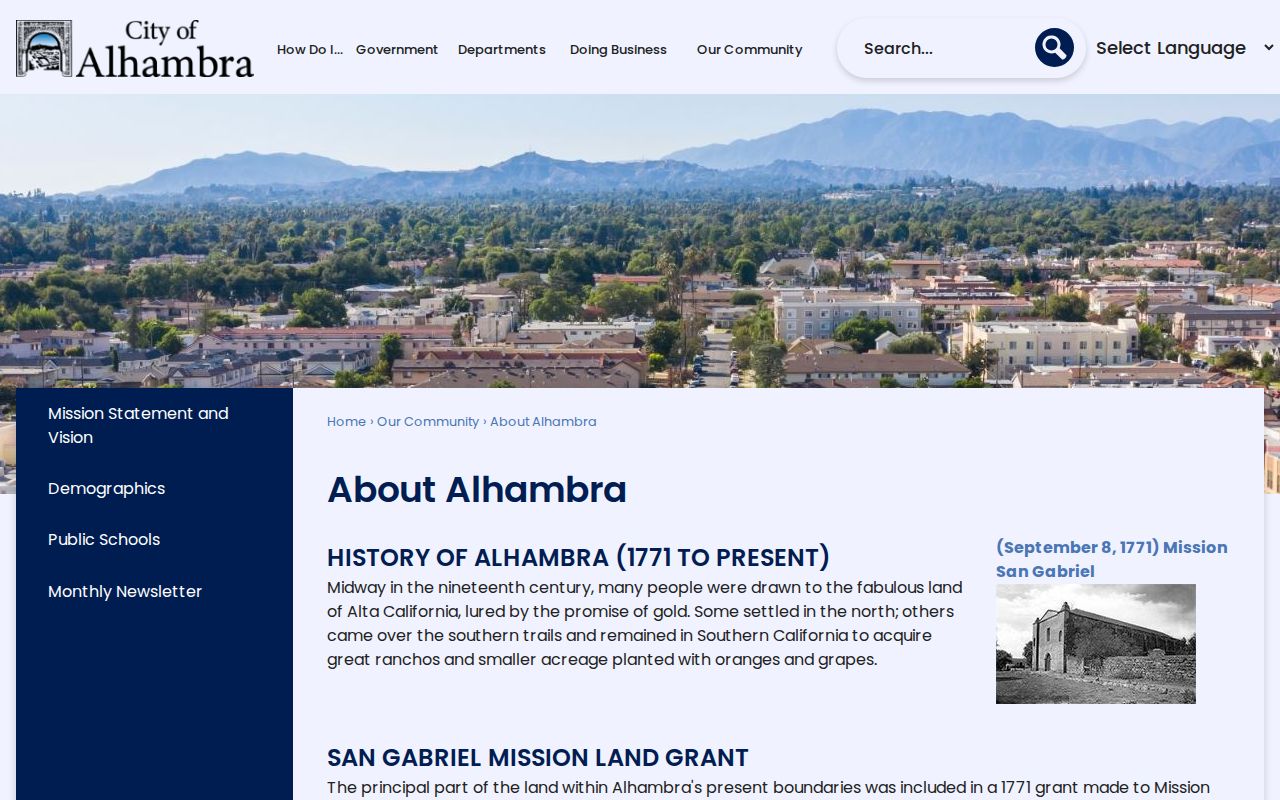
Local geography is useful when it explains a record gap, not when it fills one with an invented street match.
Alhambra Restrictive Covenant Records
Los Angeles County's restrictive-covenant modification initiative reviews recorded documents from 1850 forward and modifies unlawful racial restrictions. The historic language may remain visible in an instrument while being legally void. That makes the project relevant to previous residents research: an old deed can contain important context without every clause retaining legal force.
View the documents through the county's Norwalk appointment route. Keep the recording information, legal description, and modification status separate. A covenant document is not an occupant list, but it can explain the social and legal setting of a property chain.
The RR/CC restrictive-covenant page is the source for the current initiative.
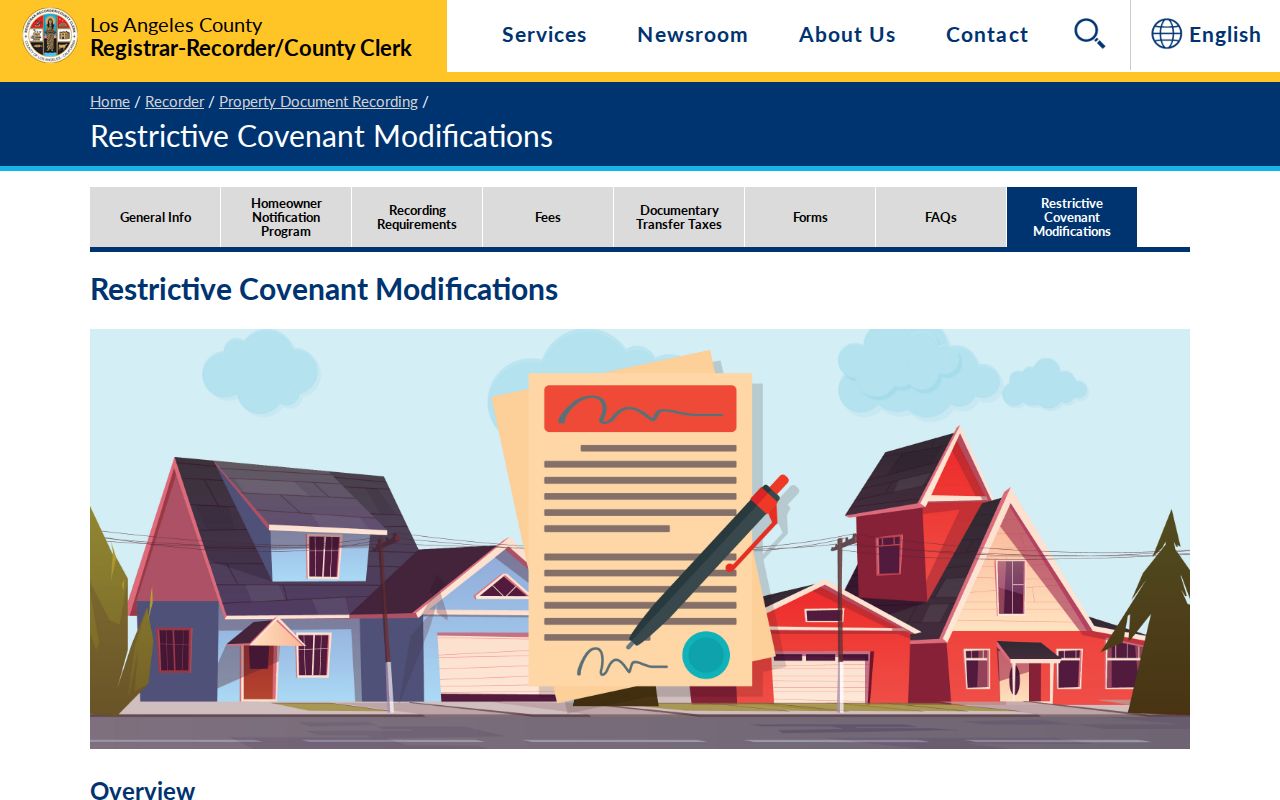
This is a record-history angle, not a reason to repeat harmful language as if it were current law.
Past Alhambra Households: Previous Residents
Previous residents research is a backward address trail with two parallel lines. The deed chain follows owners and legal descriptions. The directory, telephone, census, newspaper, and probate line follows people and household events. The lines meet at a date, address, name, spouse, or record number, but they do not mean the same thing.
Start with the current parcel, work back through the Norwalk name index, and then test each owner against the historical shelves. For an occupant who never held title, begin with the Library or Society and pair the entry with census or newspaper evidence. Use the Alhambra street directory when the question returns to the current parcel and address.
House-history limit: previous residents research is for genealogy, family history, estate work, and personal curiosity. Do not use a historical or current address trail to stalk, harass, intimidate, or harm anyone.
Record the source, year, page, custodian, and uncertainty at every turn. A careful “not found in this volume” is more useful than a confident claim built from a name alone.