
Alhambra ZIP Codes and Their Coverage
The verified ZIP picture is narrow. Alhambra's official material identifies 91801 and 91803. USPS's facility page displays 91802-9998 at 10 W. Bay State Street and shows PO-box service. The exact residential polygons and a complete neighborhood-by-ZIP split were not located, so a responsible ZIP code directory avoids guessing boundary streets.
| ZIP | Areas covered by the research | Post office | Notes |
|---|---|---|---|
| 91801 | Northern and central Alhambra examples | Alhambra Post Office | Street-delivery ZIP; exact polygon not verified |
| 91803 | Southern and western Alhambra examples | Alhambra Post Office | Street-delivery ZIP; exact split not asserted |
| 91802 | Facility and PO-box evidence | 10 W. Bay State Street | Keep separate from normal residential ZIPs pending USPS verification |
The USPS city and state lookup is the source for delivery verification.
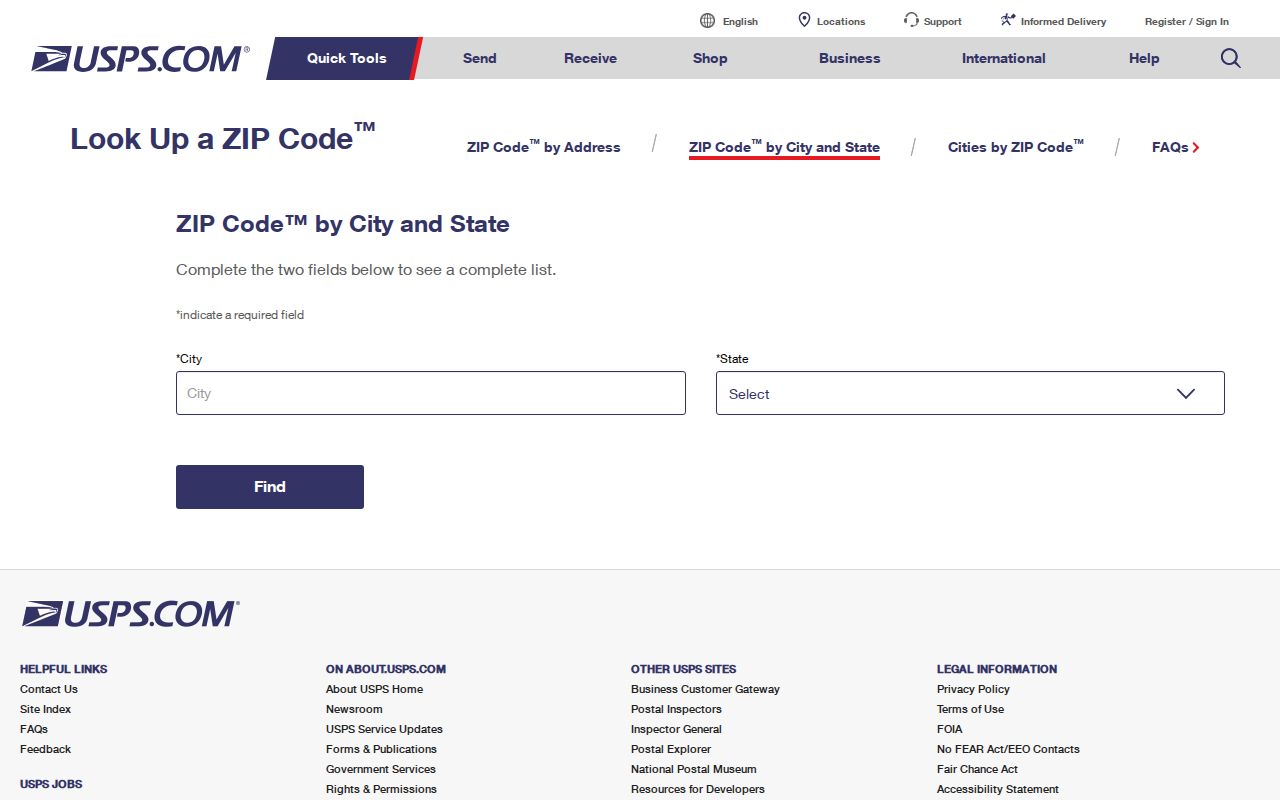
The lookup is best used on a specific address. It does not return a ZIP-wide resident roster.
Why Alhambra ZIP 91802 Is Different
91802 needs a separate label in an Alhambra ZIP code directory. The city's own material names 91801 and 91803, while USPS displays 91802-9998 for the Alhambra Post Office at 10 W. Bay State Street and notes PO-box service. That proves facility or box usage. It does not prove a normal residential neighborhood polygon.
A mailing address with 91802 may therefore identify the post office route or a box rather than a street-delivery parcel. Verify the delivery ZIP in the USPS tool, then use the Assessor Portal for a physical address and AIN if the question concerns land or a city record.
The USPS Alhambra Post Office listing supplies the facility evidence.
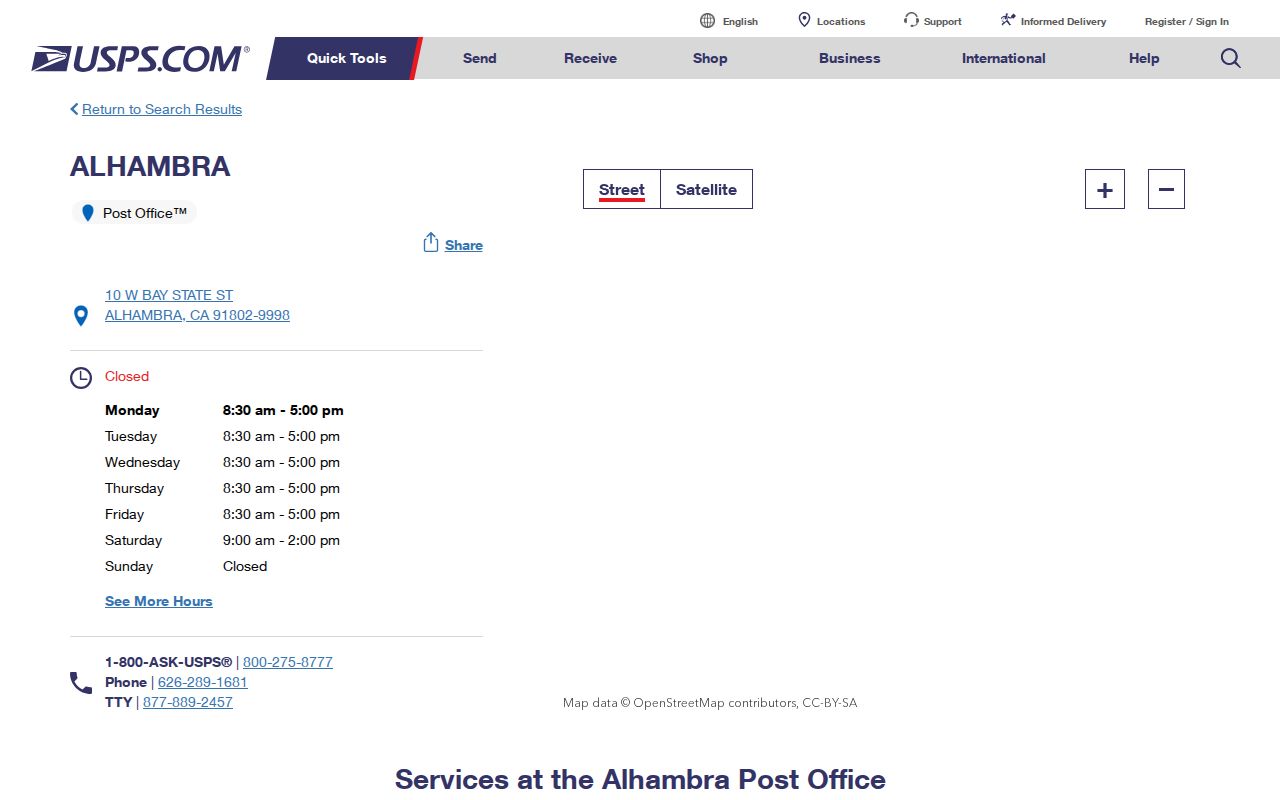
Keeping 91802 separate prevents a facility ZIP from being presented as an unsupported block of Alhambra homes.
Postal Alhambra Is Not City Alhambra
Postal city labels do not set municipal limits. A nearby parcel can use an Alhambra mailing city while falling in adjacent unincorporated territory. The East Los Angeles county map distinguishes Alhambra from nearby county territory, but a PDF map is a boundary aid rather than a resident directory.
Three questions should be kept apart: where USPS delivers, whether the parcel is inside the incorporated city, and which custodian owns the record. USPS answers the first. City or county boundary material answers the second. The Assessor, City Clerk, Community Development, RR/CC, court, or library answers the third depending on record type.
Use the Los Angeles County East Los Angeles jurisdiction map when a postal city and municipal boundary appear to conflict. Do not infer the exact ZIP polygon from that map.
Verify a ZIP Before Searching Records
A ZIP code check should happen before a resident or property search, but it should not be the final identity anchor. Use the following sequence for an address inside or near Alhambra.
- Enter the full delivery address in USPS city and state lookup and save the returned ZIP or ZIP+4 result.
- Compare the postal city with the incorporated Alhambra boundary and note any county-island concern.
- Run the physical address through the Assessor Portal to obtain an AIN, situs, map result, and legal description.
- Choose the custodian: City of Alhambra for municipal files, RR/CC for deeds and vital records, the court for case files, or the library for historical directories.
- Describe the ZIP as a filter or context clue, not as proof that a named person lives within it.
This process keeps postal geography from swallowing the record question. A ZIP code is useful because it narrows a search, but it does not replace the address, AIN, legal description, name, or date that the custodian actually indexes.
No Open Alhambra ZIP Resident List
No official open portal found in the research returns every occupant or registered voter within a ZIP code. The Assessor is address and AIN keyed. The recorder is keyed by grantor, grantee, and year. Voter status is identity-gated, and voter files require an approved purpose and contract. A parcel map can be browsed, but a ZIP layer that yields a household list was not verified.
A ZIP code directory can truthfully describe records available inside 91801 or 91803 and then route the researcher to the correct address or name search. It should not promise a ZIP-wide resident export. The same rule applies to 91802, where the evidence concerns the facility and PO boxes.
| Needed clue | Record route | Why ZIP alone is not enough |
|---|---|---|
| Parcel at an address | Assessor address/AIN | ZIP does not identify a parcel |
| Recorded owner | Recorder name/year index | Recorder does not search by ZIP or address |
| Registered voter | Status or approved voter file | Identity and purpose rules apply |
| Older household | Directory, census, newspaper | Historical collections are year-specific |
Search One Alhambra Parcel Inside a ZIP
Once a ZIP narrows the address set, do the real parcel work one address at a time. The Assessor Portal's Basic, Legal, and Map modes can connect the situs to an AIN. Map Search can show nearby parcel shapes. AIN is more durable than a postal label when a street form, unit, tract, or mailing city changes.
For a current owner association, record the assessment result and its date. For a deed, carry the owner name and approximate year to the Norwalk recorder index. For a permit, ask Community Development about the exact address and date range. For a historical household, compare the address with the Library and Historical Society's city and telephone directories.
Ownership, tax mailing, and occupancy remain distinct even after a parcel is found. That distinction is the core safeguard in ZIP-based resident research.
Situs, Mailing, and Legal Description
Three address forms can occur in the same ZIP code search. They route to different records and should be copied exactly as shown.
- Situs
- The physical location of the parcel, used by the Assessor and often by city permit staff.
- Mailing address
- Where an owner or taxpayer receives correspondence; it may use another ZIP or city.
- Legal description
- The formal land identity used in deeds, plats, and older property records.
- ZIP+4
- The longer USPS delivery code that refines a mailing address; it is not a parcel identifier.
- PO-box ZIP
- A postal routing clue that may point to a facility or box, as with the 91802 evidence.
For historical work, legal description and AIN can bridge a changed street number. For current delivery, USPS remains the authority. For a resident name, neither ZIP nor mailing address is enough without a second identity anchor.
Known Alhambra ZIP Geography Gaps
The research did not locate exact official polygons, a verified ZIP realignment history, ZIP-level resident statistics, or a complete neighborhood-by-ZIP split. No boundary streets should be invented. A ZIP code directory can state what is verified and show the check that a reader should perform for a particular address.
Alhambra's 7.63 square miles, dense built form, 26 named R-1 planning areas, and nearby county territory make labels easy to confuse. Planning areas are not ZIP subdivisions. A neighborhood name is not a postal code. A mailing city is not a municipal boundary. Keep all three terms in separate fields.
When a source disagrees, save the source date and ask the custodian. USPS can change a delivery result, a city map can use a different boundary purpose, and a county parcel portal can retain the legal land identity through both changes.
What an Alhambra ZIP Code Directory Can Offer
The useful promise is modest and concrete: verified ZIP names, a USPS delivery check, a separate note for 91802 facility evidence, a city-versus-county boundary caution, and a path from ZIP to physical parcel. From there, the researcher chooses address, AIN, deed, permit, voter, court, vital, or historical sources.
A ZIP code helps sort a record set. It does not make that record public, current, complete, or about a resident. Use the postal layer to avoid a wrong address, then let the relevant Alhambra or Los Angeles County custodian answer the actual question.
ZIP rule: verify delivery with USPS, jurisdiction with a boundary source, land with the Assessor, and people with a record that actually names or identifies them.
For street-level work after a ZIP narrows the address, use the Alhambra street directory rather than treating the ZIP as a resident list.